 |
Bultmann's
Roll Compaction-site
on Dry Granulation | |

|
|||
| |||
| |||
| |||
|
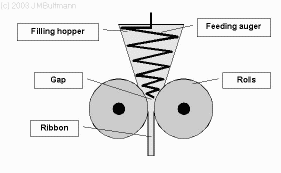
Figure: General layout of simple roll compactors. External milling equipment is required.
Since usually non free flowing powders are to be processed (otherwise
there would not be any need for a dry granulation step and one would consider
direct tabletting), the powder which is to be densified has to be conveyed
to the area between the rolls (nip area) by a so called tamping auger.
The hardware layout of dry granulation systems can be improved, of
course: A combination of two augers might be used, a powder bridge breaker
(also known as agitator) can be inserted into the feeding hopper, a small
amounts funnel might be attached in order to handle minimum quantities
of powder (e.g. during early development) and a granulation unit can be
included in the system in order to make the roll compactor a complete dry
granulation system.
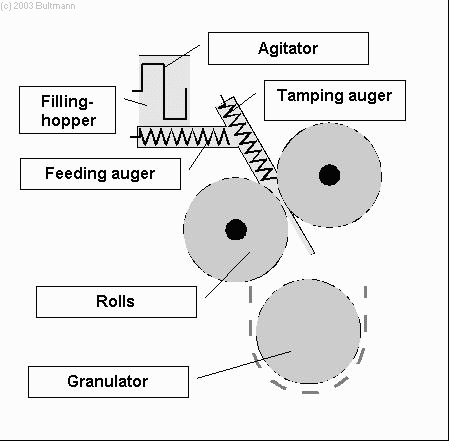
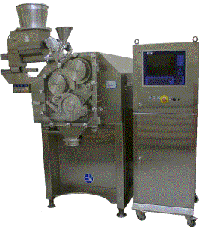
Figure: Main parts of an advanced granulation system (left: layout, right: production size compactor)